From 1 November 2026, anyone holding a Certificate of Exemption must ensure that a child under 12 is not left in close contact with an exempted dog in a private place, such as a home or garden, unless appropriate supervision is provided.
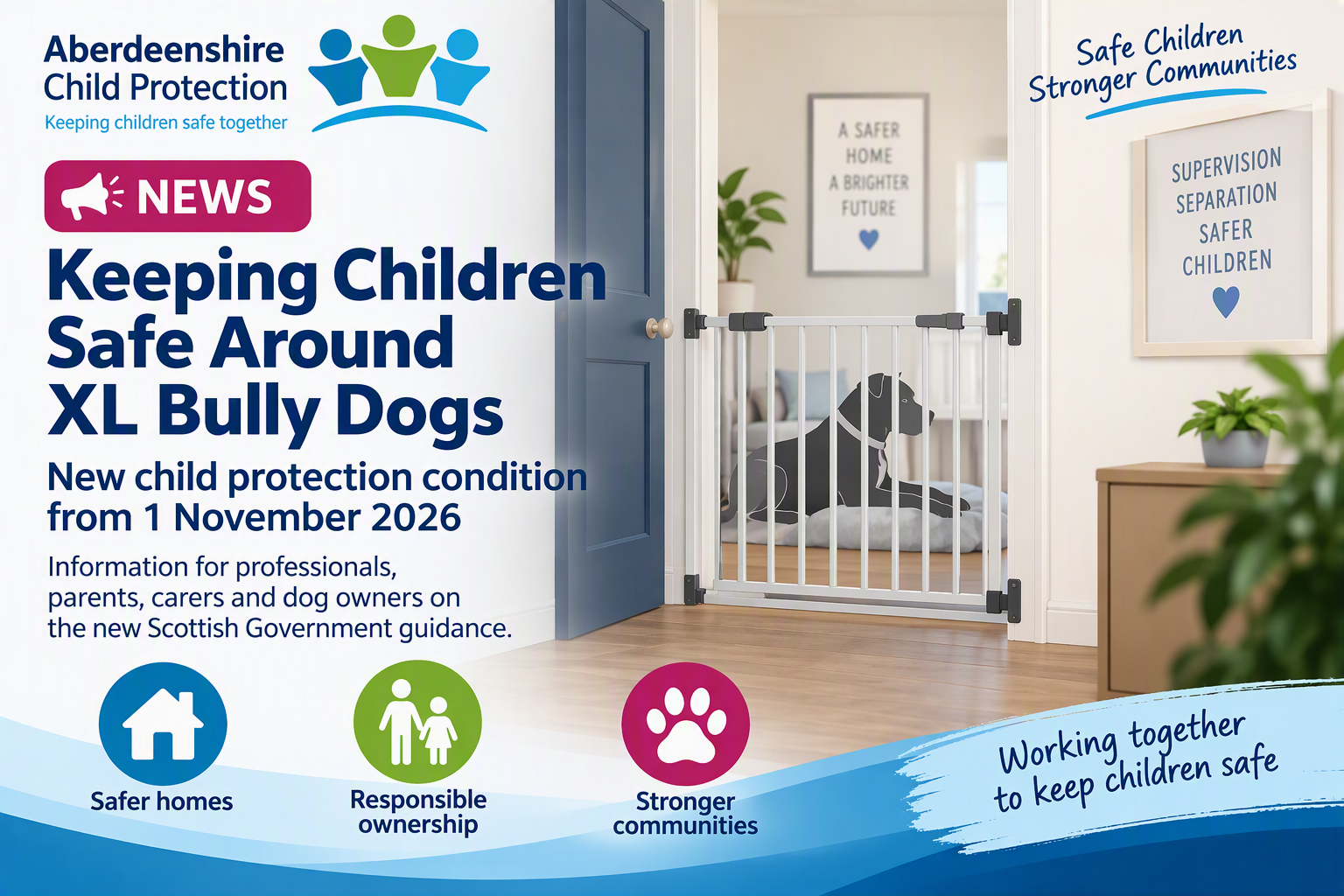
The Scottish Government has published new guidance about keeping children safe around XL Bully dogs and other prohibited dogs covered by the Dangerous Dogs Act 1991.
From 1 November 2026, anyone holding a Certificate of Exemption must ensure that a child under 12 is not left in close contact with an exempted dog in a private place, such as a home or garden, unless appropriate supervision is provided.
The new condition is intended to reduce known risks to children in domestic settings by establishing a clear minimum standard of supervision.
When a child under 12 is in close contact with an exempted dog, a person aged 16 or over must:
• Be physically present and remain nearby
• Closely observe the child and dog
• Pay attention to their interaction
• Be able to intervene and separate them immediately if necessary
Supervision must be provided in person. Cameras, baby monitors, video doorbells and similar devices are not a substitute for someone being physically present and able to intervene.
If appropriate supervision cannot be maintained, the child and dog must be safely separated in a way that prevents physical contact.
Parents, carers and dog owners should plan for times when close supervision may be interrupted. This could include when an adult is:
• Cooking
• Answering the door
• Using the bathroom
• Taking a telephone call
• Caring for another child
• Moving between different areas of the home
Safe separation might include using separate rooms with securely closed doors, suitably secure safety gates or barriers, different floors of the home, or a secure enclosed space that is safe and appropriate for the dog. Any arrangement must prevent the child and dog from making physical contact.
Adults should also recognise when a dog may need space. This may be when the dog is eating, sleeping, unwell, injured, overwhelmed by noise or attention, trying to move away or showing signs of discomfort.
When working with a child under 12 in a household or private setting where an XL Bully or another prohibited dog is present, professionals should:
• Ask whether the dog has a Certificate of Exemption
• Establish what supervision arrangements are in place
• Consider whether a person aged 16 or over can consistently supervise and intervene
• Check that safe separation arrangements are available when supervision cannot be maintained
• Consider the child’s age, development, communication, behaviour and any additional support needs
• Discuss concerns clearly with the parent, carer or dog owner
• Record relevant information, observations, advice and agreed actions
• Share relevant information in line with local child protection procedures
• Follow Aberdeenshire child protection procedures where there is concern that a child may be at risk of harm
These practice points are set out in the Multi-Agency Briefing: XL Bully Dogs New Child Protection Conditions for Holders of a Certificate of Exemption, found within the Professionals section of the website.
The presence of an XL Bully dog does not, by itself, mean that a child is at risk of significant harm. Professionals should consider the individual circumstances, including the reliability of supervision, the effectiveness of separation arrangements, the needs of the child and any wider indicators of risk. The safety and wellbeing of the child must remain paramount.
If there is an immediate danger to a child, professionals should take proportionate action to secure the child’s safety and contact Police Scotland where necessary.
Responsibility for complying with the condition rests with the Certificate holder. If the condition is not followed, the Certificate of Exemption may no longer be valid. Police may seize the dog and the owner could face criminal prosecution.
Children under 12 must not be left in close contact with an exempted XL Bully dog or another prohibited dog in a private place without appropriate supervision. If direct supervision cannot be maintained, the child and dog must be safely separated.
Although the legal condition applies specifically to prohibited dogs and children under 12, all dog owners should consider how interactions between dogs and children are supervised, regardless of the dog’s breed, size or usual behaviour.
Read the Scottish Government guidance on XL Bully dogs and child protection.